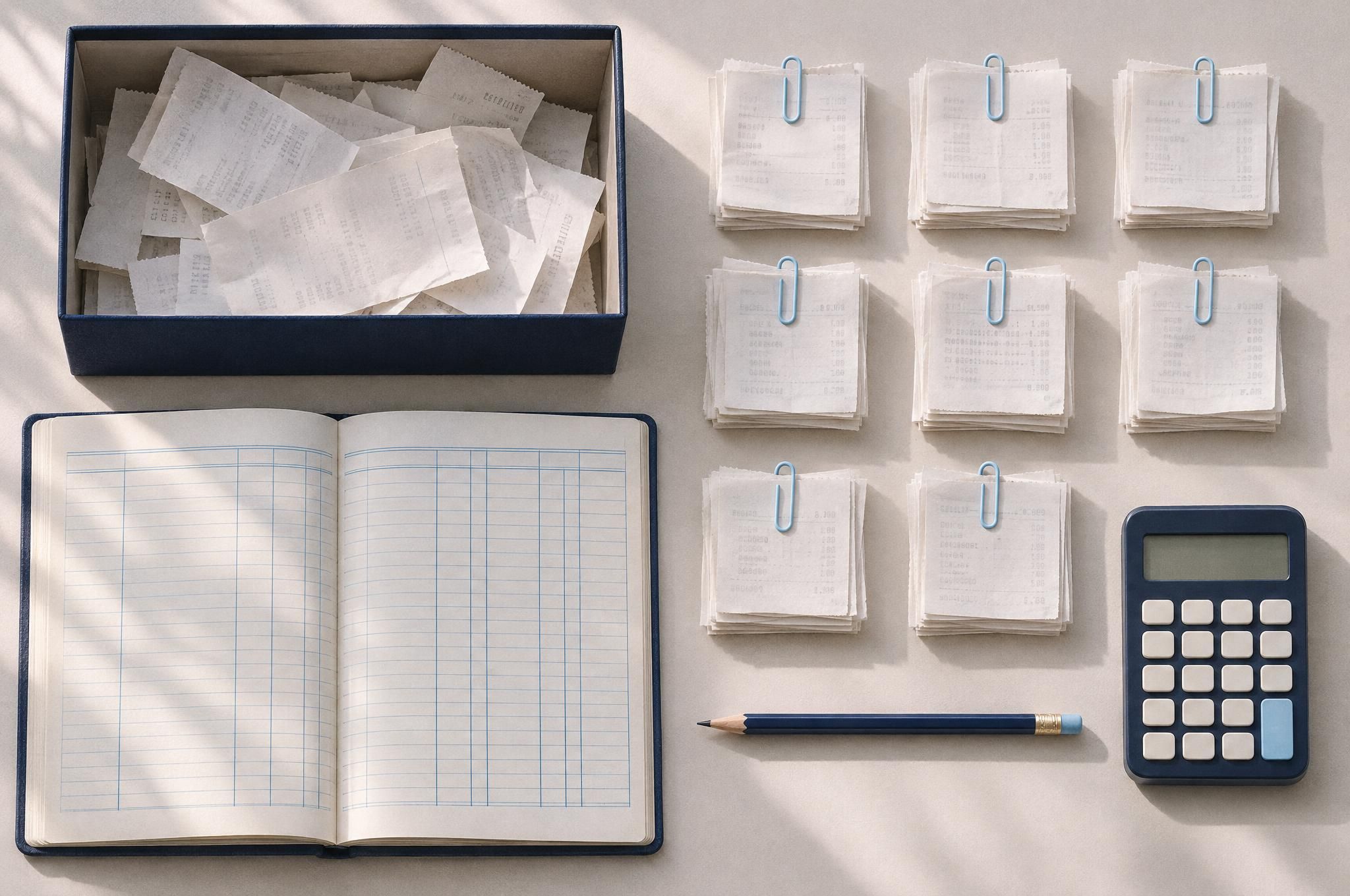
Sole traders can deduct the costs of running the business from their income before tax, as long as the cost is for business use. Typical allowable expenses include stock, insurance, travel, phone bills, website costs and subcontractor fees. You pay tax on your profit, which is income minus allowable expenses. In 2026/27, the first £12,570 of your total income is covered by the Personal Allowance, and income up to £50,270 above that is taxed at 20%.
What counts as an allowable expense?
HMRC accepts costs that you incur for the business. GOV.UK lists the main groups:
- Office costs: stationery and phone bills
- Travel: fuel, parking, train and bus fares
- Clothing: uniforms
- Staff: salaries and subcontractor costs
- Goods for resale: stock and raw materials
- Financial costs: insurance and bank charges
- Business premises: heating, lighting and business rates
- Advertising and marketing: website costs
- Subscriptions: trade or professional journals
- Training: courses linked to your trade, such as refresher courses
Record each one as it happens. A cost you forget in March is much harder to find in January.
What can I not claim?
You cannot claim money you take out of the business for yourself. Your own wages, drawings and personal bills are not expenses, because a sole trader and the business are the same person for tax. You also cannot claim anything for private use, such as ordinary clothes, your commute to a fixed workplace or a family holiday.
If you use the £1,000 trading allowance, you cannot claim expenses as well. Our post on the £1,000 trading allowance explains how to choose between the two.
Limited company owners are not self-employed, and a company deducts its costs for Corporation Tax instead. Different rules apply to directors, which our Directors’ tax and dividends service covers.
How do I claim a cost that is part personal, part business?
Claim only the business part. The same bill often covers both uses, and the split needs a method you can explain. For example, GOV.UK shows a £200 phone bill where £70 is business use, so £70 is claimable.
For costs at home, you claim a proportion of heating, electricity, Council Tax, mortgage interest or rent, and internet and phone use. Use a reasonable method, such as the number of rooms you use for work or the time you spend working there. GOV.UK gives two examples:
- Four rooms, one used only as an office, and an annual electricity bill of £1,120: the business share is £280.
- Working from home one day a week, with £280 of costs: the claim is £40.
Is there a simpler way to claim?
Yes. Simplified expenses use fixed rates in place of calculating actual costs. They cover vehicles, working from home and living on business premises.
| Cost | Flat rate (2026/27) |
|---|---|
| Car or goods vehicle, first 10,000 business miles | 55p a mile |
| Car or goods vehicle, after 10,000 miles | 25p a mile |
| Motorcycle | 24p a mile |
| Working from home, 25 to 50 hours a month | £10 a month |
| Working from home, 51 to 100 hours a month | £18 a month |
| Working from home, 101 hours or more | £26 a month |
The rates come from the GOV.UK pages on simplified expenses for vehicles and working from home. Two rules matter. You can only use the home flat rate if you work at least 25 hours a month from home, and the flat rate leaves out phone and internet, which you claim at actual cost. For vehicles, once you start using flat rates for a vehicle you must carry on with them for as long as you use it in the business. Our guide to business mileage goes through the vehicle options.
What about equipment and vehicles?
Buying equipment, machinery or a business vehicle is not an expense in the usual sense. You claim capital allowances instead. On the cash basis, you claim capital allowances on a business car and treat other items as ordinary expenses. Which route suits you depends on how you keep your accounts, and it is worth asking before you buy a large item. Simplified expenses can only be used by sole traders and partnerships without a company as a partner.
What mistakes do sole traders make with expenses?
Three come up often. The first is claiming a private cost in full, such as a phone or a car, when only part of it is for the business. The second is losing the evidence, so a legitimate claim cannot be shown if HMRC asks. The third is missing costs altogether: a subscription paid by direct debit, a bank charge or a small piece of equipment bought on a card can slip past a year-end review.
A monthly check of your bank statement against your records catches most of these. It takes about twenty minutes and saves a scramble in January.
What records should I keep?
Keep an invoice, receipt or bank statement for every claim. Note the date, the amount, what it was for and, where the cost is mixed, how you split it. Keep records for at least five years after the 31 January filing deadline.
Good records matter more from April 2027 when Making Tax Digital for Income Tax reaches businesses with qualifying income over £30,000. Those sole traders need to keep digital records through the year. Bookkeeping software makes the job quicker, and it gives you a running view of profit.
How we can help
We check every expense against HMRC’s rules, so you claim what you are entitled to and nothing you would struggle to explain. Our bookkeeping service keeps your records up to date in QuickBooks, and our Self Assessment service files your return. We work in English, Greek and Polish. Ask us a question and we will point you in the right direction.
General information for the 2026/27 tax year, correct when published. It is not advice for your situation. Tax rules change, so check the date and ask us before you act.