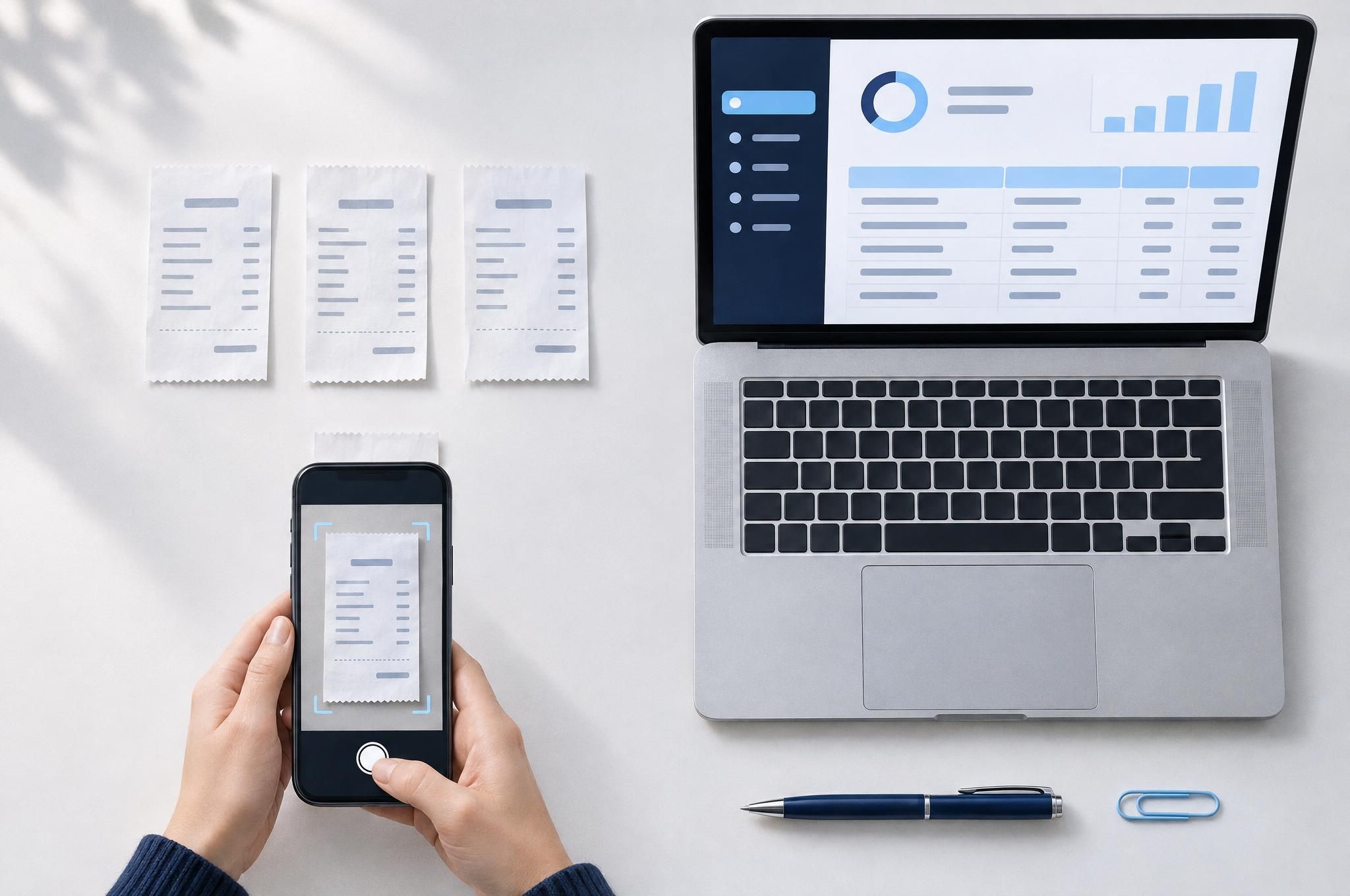
You use a Self Assessment tax return to tell HMRC (HM Revenue and Customs, the UK tax authority) about income you have not yet paid tax on. Employees pay through PAYE (Pay As You Earn, the payroll system). If you work for yourself, let out property or have other untaxed income, you report it each year on form SA100. We prepare and file Self Assessment tax returns for clients in Milton Keynes and across the UK.
What a Self Assessment tax return is
Each return covers one tax year, from 6 April to 5 April. You must file the 2025/26 return online by 31 January 2027 and pay any tax you owe by the same date.
For 2026/27 the first £12,570 of your income is tax-free. This is the Personal Allowance, and you lose £1 of it for every £2 of adjusted net income over £100,000. You pay 20% on income from £12,571 to £50,270, 40% up to £125,140 and 45% above that. Scotland sets its own rates for income other than savings and dividends.
If you are self-employed you also pay Class 4 National Insurance: 6% on profits between £12,570 and £50,270, and 2% above. Class 2 is no longer compulsory, though you can choose to pay it.
Who needs to file a return
You usually need to file if, in the tax year:
- you were a self-employed sole trader and earned more than £1,000 (the trading allowance)
- you were a partner in a business partnership
- you let out property in the UK or abroad and the rent was more than £1,000 (the property allowance)
- you were a company director with dividends or other untaxed income (see directors’ tax and dividends)
- you lived in the UK and had income from abroad, such as rent or interest from Greece
- you sold shares, crypto, a second home or other assets at a taxable gain (see Capital Gains Tax)
- you or your partner claimed Child Benefit and your adjusted net income was over £60,000 (the High Income Child Benefit Charge)
- you had savings interest or dividends above your tax-free allowances
- HMRC sent you a notice to file
Sole traders and landlords with qualifying income over £50,000 must also send quarterly updates under Making Tax Digital for Income Tax, alongside the yearly filing.
What we do for you
- Register you for Self Assessment and get your UTR (Unique Taxpayer Reference, your 10-digit HMRC number) if you are new.
- Go through your allowable expenses: office and phone costs, travel such as fuel, parking and fares, uniforms, staff and subcontractors, stock, insurance, bank charges, premises, advertising, your website and training linked to your business.
- Claim only the business share of mixed costs such as your phone, car and home, using a fair method or HMRC’s flat rate simplified expenses. Business mileage is 55p a mile (45p before 6 April 2026) for the first 10,000 miles and 25p after that.
- Compare your expenses with the £1,000 trading allowance and use whichever leaves you better off. You cannot claim both.
- Decide whether equipment and vehicles go in as expenses or through capital allowances.
- Check reliefs such as pension contributions, Gift Aid, credit for tax paid abroad and Marriage Allowance (passing £1,260 of your Personal Allowance to a spouse or civil partner).
- Work out your income tax, National Insurance, student loan repayment and payments on account, and tell you what to pay and when.
- Prepare form SA100 with the pages you need, such as SA103 for self-employment, SA105 for UK property, SA106 for foreign income and SA108 for capital gains.
- File once you approve, handle HMRC letters, and ask HMRC to reduce your payments on account (form SA303) if your income has fallen.
What we need from you
- Your UTR if you have one, your National Insurance number and date of birth
- P60, P45 and P11D forms from any job
- Sales records, invoices, receipts and bank statements for the tax year
- A mileage log if you use your own vehicle for work
- Rental income, letting agent statements and property costs
- Statements showing bank interest and dividends
- Pension contributions and Gift Aid donations
- Dates, prices and costs for anything you sold
- Details of foreign income and any tax paid abroad
- Child Benefit details and your student loan plan, if relevant
If your records are behind, we can bring them up to date first through our bookkeeping service.
Deadlines and penalties
- 5 October: if you are new, register by 5 October after the end of the tax year you started. If you started in 2026/27, that means 5 October 2027.
- 31 October: deadline for a paper return.
- 31 January: deadline for an online return. You also pay the tax you owe and your first payment on account.
- 31 July: second payment on account.
Payments on account are advance payments towards your next bill. Each one is normally half of the previous year’s bill. In your first year they can make the January bill far bigger than you expect, so we show you the figure early.
If you file late, HMRC charges £100 straight away, even if you have no tax to pay. After 3 months it adds £10 a day for up to 90 days (up to £900). At 6 months and again at 12 months, you pay a further £300 or 5% of the tax due, whichever is higher. If you pay late, HMRC charges interest from the due date and penalties of 5% of the unpaid tax at 30 days, 6 months and 12 months. If you are in Making Tax Digital for Income Tax, newer penalty rules apply.
How it works with SOLID Accounts
- First contact. Call 01908 842385 or email us with a short outline of your income.
- Quote and engagement letter. We send a quote and an engagement letter that sets out who does what.
- ID check. Before we start, we confirm your identity and address under anti-money laundering rules.
- Gathering records. We send a checklist. You email your documents or bring them to us in Milton Keynes.
- Preparation. We prepare the return and tax calculation, and ask you about anything unclear.
- Review. Kiki checks every return before it comes to you.
- Your approval. You see the figures and the tax due, and confirm them.
- Filing. We file online with HMRC and send you a copy.
- After filing. We send you the payment amounts and dates, and deal with any HMRC letters about the return.
Help in Greek and Polish
You can work with us in Greek or Polish from the first call to the final figures. Kiki is a native Greek speaker, and a native Polish speaker on our team looks after Polish-speaking clients. Your return and HMRC filings stay in English, and we explain each part in your language. Read more about how we work with Greek-speaking and Polish-speaking clients.