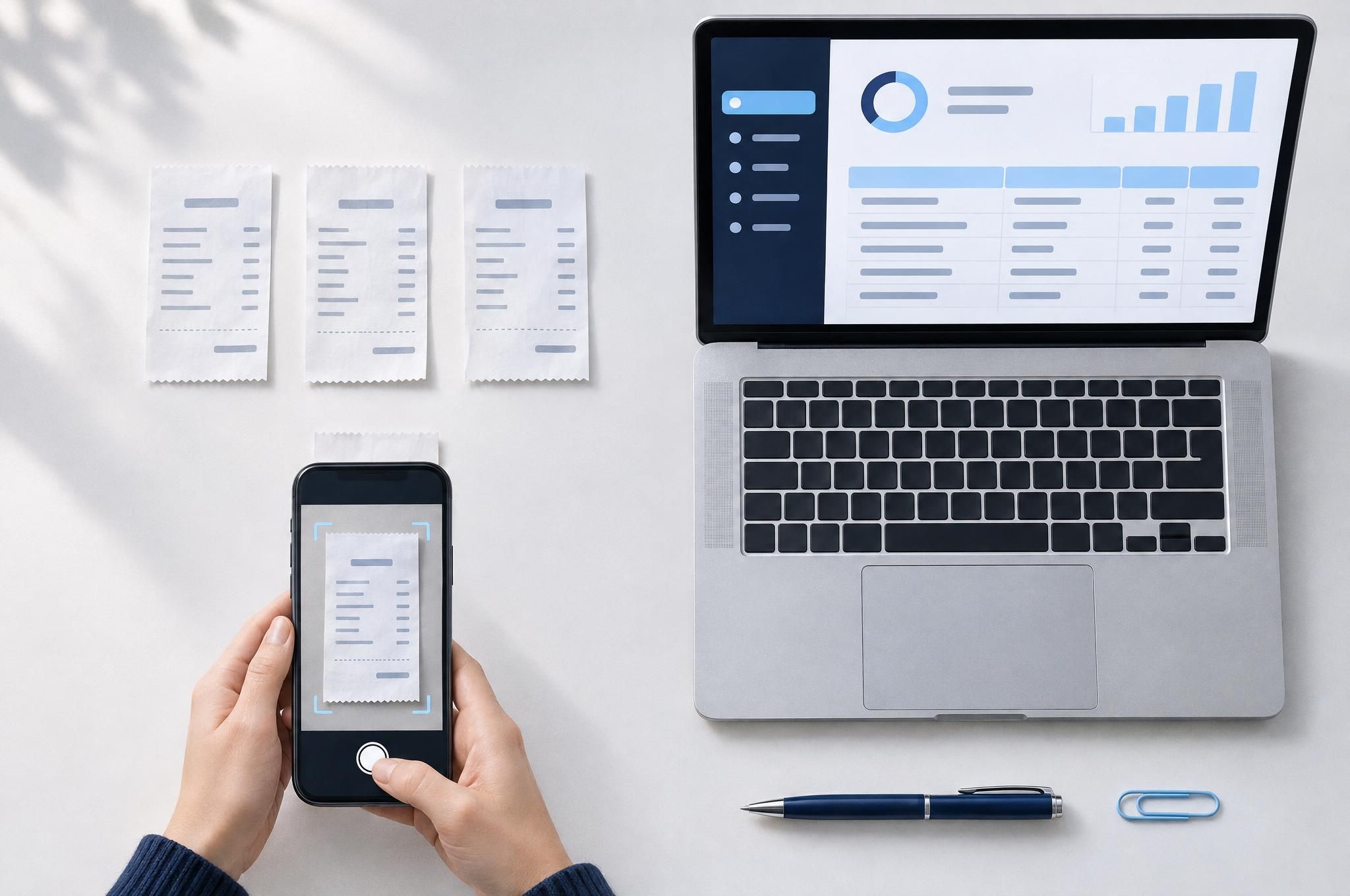
Bookkeeping is the routine of recording every transaction your business makes: sales and purchase invoices, money in and money out, and matching it all to your bank statements. We provide bookkeeping services for sole traders, partnerships and limited companies in Milton Keynes and across the UK, monthly or quarterly, and we check every set of records before it goes to you.
What bookkeeping is
Your VAT returns, year-end accounts, Corporation Tax and Self Assessment can only be as accurate as the records behind them. Up-to-date books also show you how the business is doing: who owes you money, what you owe, and an estimate of your profit before the tax bill arrives.
Many businesses must now keep digital records by law. If you are VAT registered, you keep digital records under Making Tax Digital for VAT. Sole traders and landlords with qualifying income over £50,000 joined Making Tax Digital for Income Tax on 6 April 2026, and the threshold falls to £30,000 from April 2027 and £20,000 from April 2028.
If you run a limited company, you also have a duty under company law to keep adequate accounting records, separate from the directors’ own money.
Who needs it
- Sole traders who would rather spend their evenings on the business than on receipts
- Limited companies, where the law requires proper records
- Partnerships that need each partner’s share worked out from clean figures
- VAT-registered businesses filing through Making Tax Digital software
- Sole traders and landlords joining Making Tax Digital for Income Tax
- Construction businesses tracking CIS deductions (Construction Industry Scheme tax taken from subcontractor payments)
- Businesses with staff, where payroll costs need to match the books
- Anyone who is behind with their records or has a letter from HMRC asking for them
What we do for you
We work in QuickBooks. Kiki is an Intuit Certified QuickBooks ProAdvisor (Level 2, 2025) and a Making Tax Digital ProAdvisor with QuickBooks. If you already use other software, talk to us about it.
- Set up QuickBooks for your business and bring in your existing records.
- Record sales invoices and purchase bills, with a digital copy of each receipt attached.
- Reconcile every bank, card and loan account to its statement, line by line.
- Code each transaction to the right category and keep personal spending out of the business figures.
- Track who owes you and who you owe, so you can chase late payers early.
- Keep your VAT records ready for each return.
- Record CIS deductions on payments to and from subcontractors, ready for CIS returns.
- Post wages and employer costs from your payroll.
- Keep the director’s loan account accurate for company clients.
- Produce a profit and loss report and balance sheet at the intervals we agree.
- Catch up on months or years of bookkeeping you have fallen behind on.
What we need from you
- Bank feeds or statements for every business bank, card and loan account
- Sales invoices, till reports and card machine or online sales reports
- Purchase invoices and receipts (photos are fine)
- Details of cash taken and cash spent
- Loan, lease and hire purchase agreements
- Payroll reports and CIS statements, if you have them
- Your VAT registration details and the VAT scheme you use
- Last year’s accounts or closing balances
- Access to your bookkeeping software, if you already use one
Deadlines and penalties
Bookkeeping has no filing deadline of its own. Most of your tax deadlines depend on it:
- VAT returns: return and payment due 1 month and 7 days after the end of the VAT period.
- Making Tax Digital for Income Tax: quarterly updates due by 7 August, 7 November, 7 February and 7 May.
- Payroll and CIS: a Full Payment Submission (FPS) on or before each payday, and the monthly CIS300 return by the 19th.
- Self Assessment: online return and payment by 31 January.
- Companies: accounts at Companies House 9 months after the year end, Corporation Tax payment 9 months and 1 day after the accounting period ends, and the CT600 return within 12 months.
If your records fall behind, you risk filing late. HMRC charges £100 straight away for a late Self Assessment return, and from £100 for a late CIS return. It can also charge a penalty if you cannot show adequate records.
How it works with SOLID Accounts
- First contact. Call 01908 842385 or email us with a rough idea of how many transactions you have each month.
- Quote and engagement letter. We send a quote and an engagement letter that sets out who does what.
- ID check. Before we start, we confirm your identity and your business details under anti-money laundering rules.
- Gathering records. You give us access to your bank feeds and software, or send statements and receipts.
- Preparation. We clear any backlog, then keep the books up to date monthly or quarterly.
- Review. Kiki checks the reconciliations and reports before they come to you.
- Your approval. You answer our queries and confirm anything we could not identify.
- Filing. We use the finished records for your VAT returns, Making Tax Digital updates, payroll and accounts.
- After each period. We send your reports and a list of anything that needs your attention.
Help in Greek and Polish
You can work with us in Greek or Polish. Greek is Kiki’s first language, and Polish-speaking clients work with a native Polish speaker on our team. Your books, reports and HMRC filings stay in English, and we explain them in your language, including what each report says about your business.