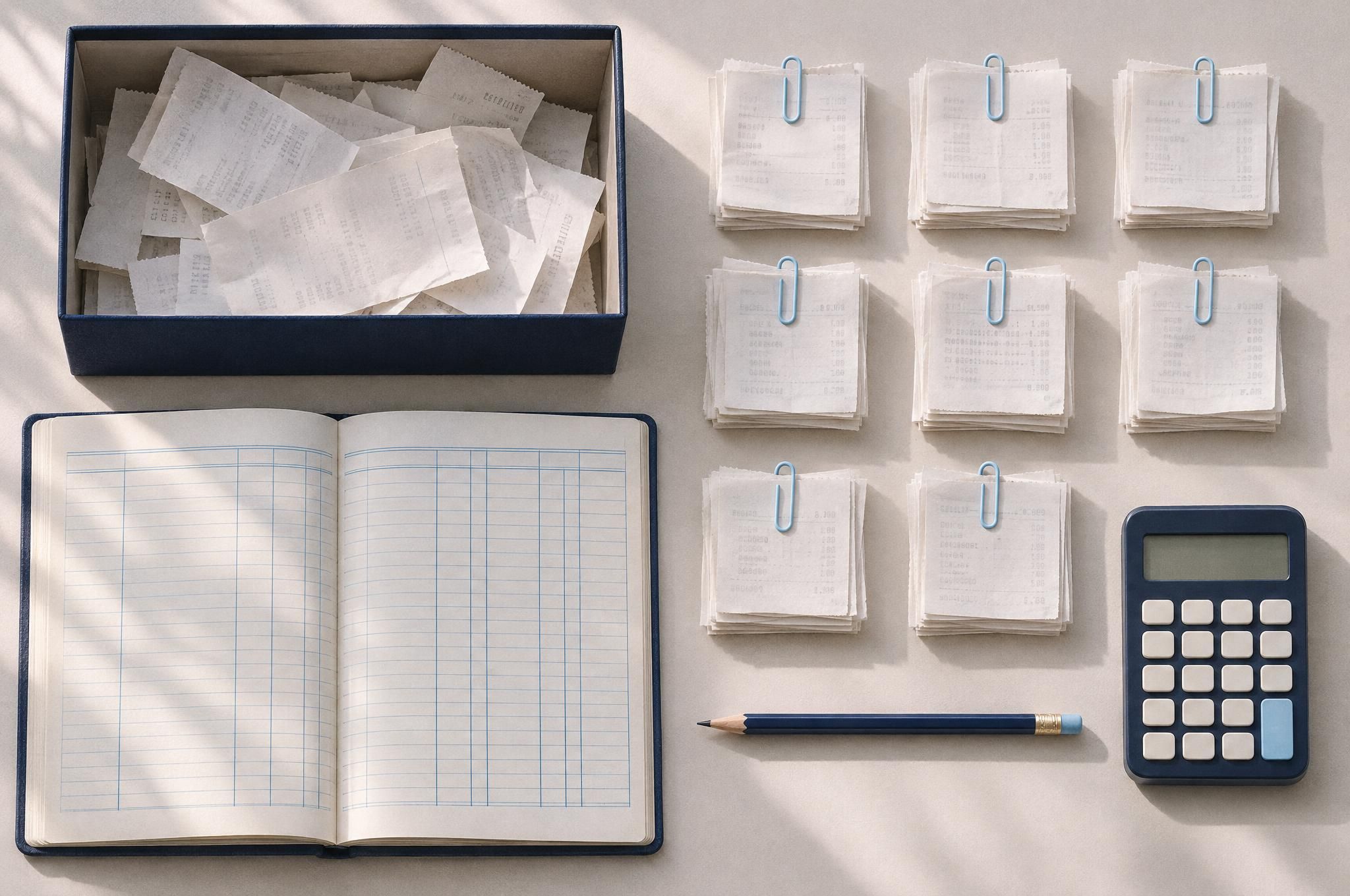
Year-end accounts are the summary of your business’s financial year: what came in, what went out, what the business owns and what it owes. We prepare year-end accounts for sole traders, partnerships and limited companies in Milton Keynes and across the UK. You can give us your own bookkeeping records, or we can keep your books monthly or quarterly so the figures are ready when the year ends.
What year-end accounts are
Every set of accounts has two main parts. The profit and loss account shows your income and costs for the year and the profit or loss left over. The balance sheet shows what the business owns (cash, equipment, vans, money owed to you) and what it owes (suppliers, loans, tax) on the last day of the year.
The next steps depend on how your business is set up.
- Sole traders and partnerships do not file accounts anywhere. You still need them, because the profit figure goes onto your Self Assessment tax return (SA100) or the partnership return (SA800).
- Limited companies must prepare statutory accounts under the Companies Act. The company files them at Companies House, where they go on the public record, and sends them to HMRC with its Corporation Tax return (CT600).
Most small companies can file simpler accounts. Micro-entity accounts are the shortest format, for the smallest companies, and small company accounts carry a little more detail. A company that did not trade files dormant company accounts. We check every year which format your company can use.
A limited company also files a confirmation statement (form CS01) with Companies House. It confirms the company’s details rather than its figures: registered office, directors, shareholders, people with significant control and business activity.
From April 2027, under the Economic Crime and Corporate Transparency Act, companies will have to file accounts through software, and small companies will lose some options they have today to leave information off the public record. We will explain what this means for your company before your first filing under the new rules.
Who needs it
- You are a sole trader or partner and need an accurate profit figure for your tax return.
- You run a limited company or LLP and must file statutory accounts every year.
- Your company is dormant but still has to file accounts and a confirmation statement.
- Your bookkeeping is behind and the Companies House deadline is getting close.
- A bank, mortgage lender or landlord has asked for your latest accounts.
What we do for you
- Review your bookkeeping and reconcile every business bank account, card and loan to its statements.
- Make the year-end adjustments: money owed to you and by you, prepayments, accruals, stock and work in progress.
- Record assets bought or sold in the year, such as equipment, machinery, vans and cars, and claim capital allowances on them to reduce your taxable profit.
- Prepare statutory accounts in the right format (micro-entity, small company or dormant) for the directors to approve and sign.
- File the accounts with Companies House and send them to HMRC with your Corporation Tax return.
- Prepare and file your confirmation statement, and update Companies House when directors, shareholders or your registered office change.
- For sole traders and partnerships, prepare the accounts we use for your Self Assessment tax return.
- Go through the finished accounts with you in plain English.
What we need from you
- Bank statements for every business account for the full year, including savings accounts and credit cards.
- Your sales invoices and records of all income.
- Receipts and bills for business costs.
- Access to your bookkeeping software or spreadsheet, if you keep one.
- Invoices for assets bought in the year, and details of anything sold.
- Loan, hire purchase and lease agreements.
- A stock count and the value of unfinished work at the year end, if you hold stock.
- Records of dividends paid and money directors took out of or paid into the company.
- Your company authentication code, so we can file with Companies House for you.
- Last year’s accounts and tax return, if we have not worked together before.
Deadlines and penalties
- Private limited companies: accounts are due at Companies House 9 months after the year end. A company’s first accounts are due 21 months after the date it was incorporated.
- Corporation Tax: payment is due 9 months and 1 day after the accounting period ends, and the CT600 return 12 months after it ends. The accounts go with the return.
- Confirmation statement: at least once every 12 months, within 14 days of the review date.
- Sole traders and partnerships: the figures go on your Self Assessment return, due online by 31 January after the end of the tax year. If you file late, HMRC charges £100 straight away, with more penalties after 3, 6 and 12 months.
If your company files accounts late, Companies House charges an automatic penalty. The penalty rises the later you file, and doubles if you file late two years running. Directors who fail to file accounts or a confirmation statement commit an offence, and Companies House can strike the company off the register.
Keep company records for 6 years from the end of the financial year. Sole traders and partners keep records for at least 5 years after the 31 January filing deadline.
How it works with SOLID Accounts
- First contact. Call 01908 842385 or email us with your business type and year end.
- Quote and engagement letter. We send a written quote and an engagement letter that sets out the work.
- ID check. Before we start, we verify your identity under anti-money laundering rules. For a company, we also check its directors and owners.
- Gathering records. You send your records, and we set up our authorisation with HMRC.
- Preparation. We prepare the accounts and send any questions in one list.
- Review. Kiki checks every set of accounts before you see it.
- Your approval. We go through the accounts with you, and the directors approve and sign them.
- Filing. We file with Companies House and HMRC and send you confirmation.
- After filing. We send you copies and any tax to pay, and we diary next year’s deadlines.
Help in Greek and Polish
You can work with us in Greek or Polish, by phone, by email or in person in Milton Keynes. Kiki is a native Greek speaker, and a native Polish speaker on our team looks after Polish-speaking clients. Your accounts and filings stay in English, and we explain every figure in your language before you approve them.